


Dreaming of a life where fresh eggs and homegrown veggies aren’t just a fantasy? Homesteading land for sale might just be your golden ticket to self-sufficiency and a lifestyle that screams “I’m living my best life!” Imagine waking up to the sound of roosters crowing instead of alarm clocks and trading your morning coffee for a cup of herbal tea brewed from your very own garden.
Homesteading Land For Sale
Homesteading land offers opportunities for sustainability and personal fulfillment. Individuals often choose this path to embrace a hands-on lifestyle, reconnecting with nature.
Definition of Homesteading
Homesteading refers to the practice of establishing a self-sufficient lifestyle on a designated piece of land. It involves growing food, raising animals, and utilizing resources sustainably. This approach fosters independence and encourages people to cultivate essential skills like gardening and animal husbandry. By transforming land into a productive area, individuals contribute to their community’s food security and environmental health.
Benefits of Homesteading Land
Homesteading land provides numerous advantages. Access to fresh produce and organic food supplies fosters healthier living. Owning this type of land often leads to significant savings on grocery bills, allowing individuals to allocate funds elsewhere. Sustainable living practices reduce environmental footprints and promote biodiversity. Additionally, growing one’s food can cultivate a sense of accomplishment and wellness. The lifestyle also offers opportunities for physical activity, increasing overall fitness and well-being. Communities of like-minded individuals often form, supporting shared interests and knowledge exchange.
Finding Homesteading Land for Sale
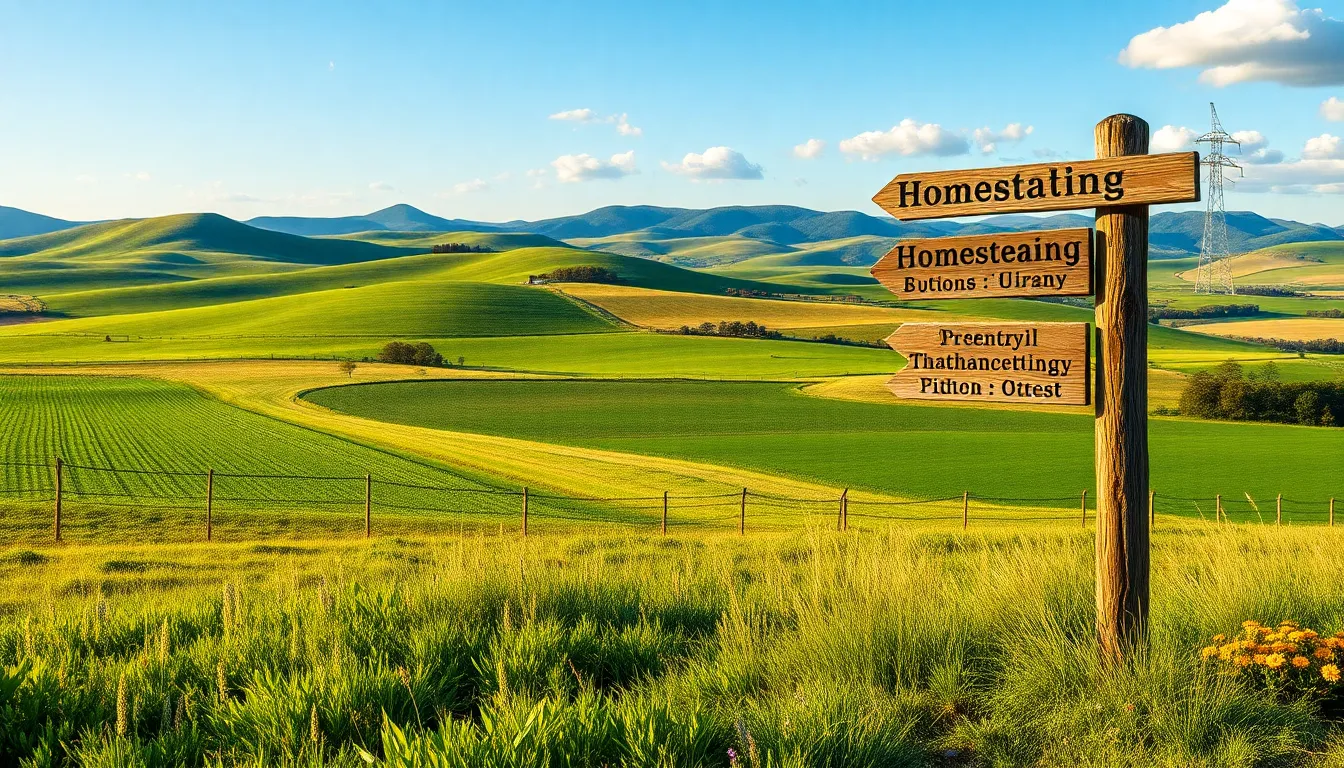
Finding the right homesteading land requires diligent research and the right resources. Various tools and platforms simplify the search for ideal properties.
Online Resources and Listings
Online resources offer diverse listings for homesteading land. Websites like Zillow and Realtor.com provide filters to target specific features such as acreage and location. Homesteading-specific platforms like LandWatch and Rural Property also cater to unique needs within the niche. Social media, particularly local Facebook groups, showcase listings and community insights, enhancing knowledge about available properties. Various blogs and forums deliver tips on identifying favorable locations and navigating the buying process. Investigating these online channels creates a comprehensive view of current offerings.
Working with Real Estate Agents
Working with real estate agents streamlines the search for homesteading land. Experienced agents specialize in rural properties and understand the nuances of this market. They offer tailored assistance, matching buyers with appropriate locations based on preferences and goals. Agents know local zoning laws, providing valuable insights into permissible uses for the land. Establishing a clear communication channel with the agent fosters a more productive collaboration. Furthermore, leveraging their networks improves access to listings that may not appear online. Utilizing a knowledgeable real estate agent enhances the likelihood of finding the ideal homesteading property.
Factors to Consider When Choosing Land
Choosing the right homesteading land involves several key factors. Understanding these elements ensures a successful homesteading journey.
Location and Accessibility
Location influences many aspects of homesteading. Proximity to towns affects access to resources and services. Being near markets simplifies supply runs for tools, seeds, and livestock feed. Accessibility of the land includes road conditions and travel time to urban areas. Rural properties with well-maintained access roads typically maintain higher property values. Consider the distance to essential facilities like hospitals and schools. Remote locations may offer peace and quiet, but accessibility should still meet practical needs.
Water Sources and Soil Quality
Water access plays a crucial role in homesteading. Properties with reliable sources of water, such as wells or streams, support gardens and livestock. Soil quality significantly impacts agricultural success. Testing soil for nutrients and pH levels offers insights into its potential for growing crops. Fertile soil encourages healthy plant growth and reduces the need for fertilizers. Additionally, properties with well-draining soil reduce flooding risks during heavy rains. Therefore, examining both soil and water sources is vital to realizing a productive homestead.
Financing Your Homesteading Land Purchase
Securing financing for a homesteading land purchase involves several options. Understanding these can simplify the process and lead to better decisions.
Traditional Loans and Mortgages
Traditional loans and mortgages represent a popular choice for many buyers. Lenders often offer standard mortgage options, allowing for flexible repayment terms based on creditworthiness. Many banks also provide specific rural financing programs tailored to homesteaders. These programs may offer lower interest rates compared to standard loans. Borrowers can seek assistance from professionals to navigate eligibility requirements and secure favorable terms. Additionally, Federal Housing Administration or USDA loans may assist those purchasing rural properties with minimal down payments.
Alternative Financing Options
Exploring alternative financing options can expand purchasing possibilities. Seller financing involves the seller acting as the lender, enabling buyers to negotiate terms and make payments directly to the seller. Land contracts provide another choice, allowing buyers to pay in installments until the property’s full price is met. Crowdfunding platforms and community-based lending groups also support potential homesteaders seeking funds. Investors may consider partnerships for shared ownership, which reduces individual financial burden. Understanding these diverse financing methods empowers buyers to choose a suitable path for homesteading land acquisition.
Conclusion
Finding the right homesteading land can be a transformative journey. With careful consideration of location accessibility and resources individuals can create a sustainable lifestyle that offers both independence and fulfillment. Embracing this lifestyle not only enhances personal well-being but also contributes positively to the environment and local communities.
As aspiring homesteaders explore various financing options and resources they’ll discover that the path to self-sufficiency is within reach. The joy of cultivating one’s own food and living in harmony with nature awaits those ready to take the leap into homesteading.